
Expert chart course on the role of turnaround management in Nigeria economy recovery sTwo-day conference brings together financial leaders, policymakers, and turnaround specialists to tackle Nigeria’s industrial declinetrategy
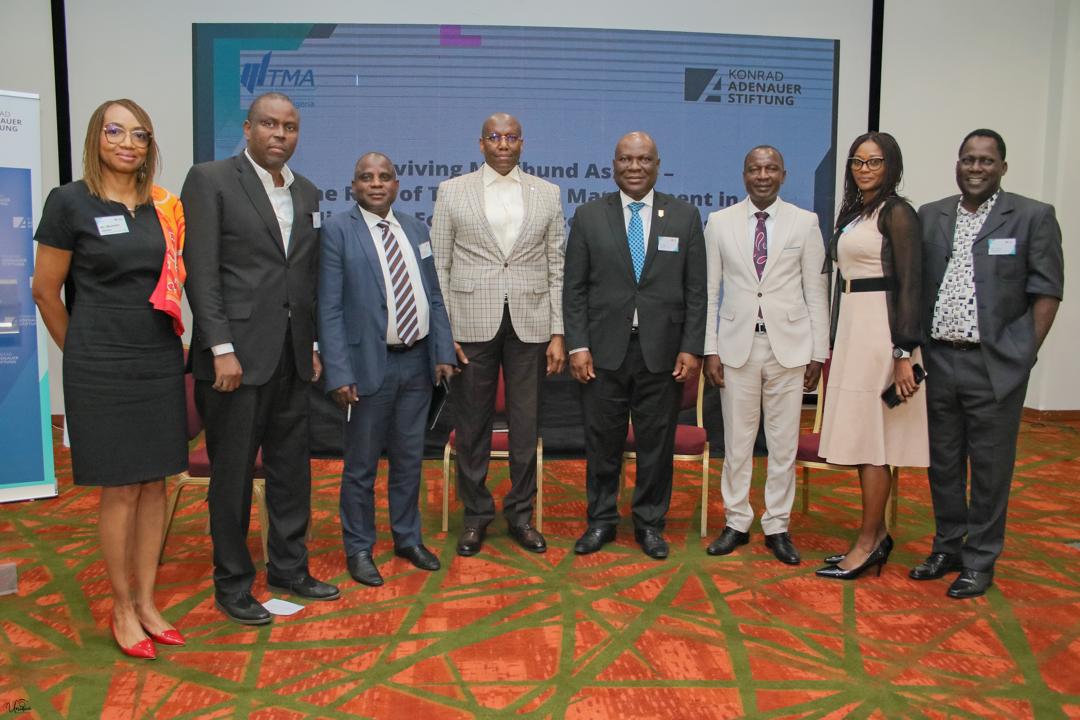
The Turnaround Management Association of Nigeria (TMA), in partnership with Konrad Adenauer Stiftung Nigeria (KAS), recently convened a crucial two-day conference at Eko Hotel, bringing together experts from financial institutions, investors, policymakers, and turnaround specialists to explore viable solutions for Nigeria’s economic revival.
The conference, themed “Reviving Moribund Assets: The Role of Turnaround Management in Nigeria’s Economic Recovery Strategy,” focused on strategies to recover and rescue distressed companies and businesses across the country.
The Crisis of “Business as Usual”
Opening the conference, Dr. Steve Ogidan, President of Turnaround Management Nigeria, delivered a compelling presentation on “Turnaround Management as a Tool for Economic Prosperity in the Face of Global Headwinds and Local Economic Uncertainties.”
Dr. Ogidan painted a sobering picture of the current business landscape, warning that “business as usual” is a recipe for failure. He cited alarming statistics: “In Nigeria, 80% of small and medium enterprises fail within five years.”
He referenced a recent Bank of Industry Environmental, Social, and Governance (ESG) report launch, where panelists emphasized that businesses are increasingly evaluated beyond profitability. “Social responsibility is shown to be crucial, as profits follow ethical practices sustainably,” he noted.
The challenges facing Nigeria are multifaceted, Dr. Ogidan explained. Manufacturing utilization hovers around 55%, non-performing loans exceed ₦1.3 trillion, and youth unemployment surpasses 33%. However, he sees opportunity amid crisis: “With over 65% of Nigeria’s 220 million population under 40, there is abundant energy and opportunity. The key concern is whether industries can absorb this workforce.”
Dr. Ogidan advocated for a philosophical shift: “The philosophy of turnaround management sees crises as opportunities for transformation. Applying these principles systematically across Nigerian enterprises can convert challenges into unprecedented economic growth.” Rather than allowing struggling companies to be taken over, he proposed revamping management and installing better leadership teams to drive turnarounds.
Kano State’s Bold Initiative
In his goodwill message, Nazir Halliru, Director General of Kano Investment Company, announced Kano State’s readiness to collaborate with stakeholders to revitalize the state’s moribund industries. The agency recently conducted a comprehensive geo-mapping exercise that identified over 1,000 inactive industries out of approximately 3,600 in the region.
Halliru revealed that Governor Alhaji Yusuf eagerly anticipates working with stakeholders and the Bank of Industry to breathe new life into these assets, stimulating economic growth, job creation, and community development while addressing insecurity challenges.
The Staggering Cost of Idle Capacity
During a panel session moderated by Alhaji Adamu Abdulqadir Gambo, Vice President TMA North, panelists critically examined how to revive moribund assets for economic growth in Nigeria.
Gambo presented stark statistics: “According to recent data from the Manufacturers Association of Nigeria, industry capacity utilization hovers around 55%, meaning nearly half of the current productive capacity remains idle. The Bank of Industry estimates that non-performing assets of manufacturers amount to about ₦2 trillion. Thousands of SMEs that once contributed to employment and GDP now sit dormant or operate below potential.”
He framed the challenge in human terms: “These are not just statistics—they represent factories with silent machinery, warehouses filled with unsold inventory, skilled workers without jobs, and communities without economic anchors. But within this challenge lies tremendous opportunity. If we could revive even 20% of these moribund assets, we could create hundreds of thousands of jobs, generate billions in economic activity, and strengthen the industrial base.”
The Root Causes: Management, Not Just Capital
Responding to questions about non-performing loans, a panel of experts Dr. Victor Dike,CEO, Quick Project Limited, Dr. Haggai Gutap, CEO, Fingertips Enterprise Development Partners Limited, and Dr. Naomi Omoduemuke, Managing Partner, EnTwo Consult offered critical insights.
Dr. Dike emphasized that the statistics on non-performing loans keep evolving, but a key issue among MSMEs is management capacity. “Businesses often wrongly assume capital is their primary challenge,” he explained. From banking experience, loan officers frequently ask, “Where did your previous capital go?” before approving new facilities, emphasizing the importance of demonstrating improved management capabilities before receiving additional funds.
He stressed that turnaround managers must assess whether a business has the capacity to handle increased funding effectively. “Managing ₦50 million effectively differs significantly from managing ₦2 billion. Capacity building and discipline in running businesses are crucial to reducing failure rates.”
Dr. Gutap added a microfinance perspective, noting that NPLs in that sector can be even larger than those held by the Bank of Industry. Borrowers often perceive funds as government grants, leading to a lack of repayment discipline. He urged financial institutions to focus on “educating borrowers about proper fund management” to enhance repayment rates and sustainability.
Dr. Omoduemuke highlighted cultural factors impacting business success, particularly favoritism in hiring unqualified family members into key positions, which threatens organizational stability. She emphasized that timely seeking of expert help is critical, and “staying ahead of trends like social media is necessary to avoid being left behind.”
The panel also acknowledged the positive impact of fintech platforms like OPay and Money Point in reducing transaction times and improving financial inclusion, though some risks remain.
Day Two: Confronting the Skills Gap
On the second day, Mr. Akinyele Aluko, MSME Consultant and Former Director of the Lagos Chamber of Commerce, highlighted critical challenges impeding Nigeria’s enterprise growth, emphasizing inadequate manpower development, weak strategic planning capabilities, and limited access to appropriate funding mechanisms.
He pointed to a glaring skills mismatch: “Nigerian universities produce over 600,000 graduates annually, yet 50% remain unemployed or underemployed, with only a small fraction possessing industry-ready skills.”
Strategic deficiencies compound the problem. “Only 25% of Nigerian SMEs have written business plans,” Aluko noted, causing enterprises to operate without clear long-term vision. The funding gaps are equally severe, including a staggering $158 billion MSME financing gap, with only 5% of bank credit going to SMEs.
Despite these challenges, Aluko remained optimistic about transformation opportunities, reiterating that reviving just 20% of moribund assets could create hundreds of thousands of jobs and generate billions in economic activity.
He illustrated success stories, such as a Lagos-based manufacturing SME that reduced training costs by 60% through technical college partnerships and achieved an 80% retention rate, exemplifying how targeted interventions can overcome manpower and funding constraints.
Aluko proposed an integrated approach combining industry-academia collaboration, enhanced vocational training, subsidized consulting, and innovative financing solutions. He advocated for medium-term measures like business development services and peer learning networks, and long-term reforms including education system reform with STEM emphasis and formulation of a National MSME Development Strategy.
He concluded with a powerful warning: “The cost of inaction is too high continued economic stagnation, rising unemployment, and missed opportunities for prosperity.”
A Scathing Indictment of Public Asset Management
In his keynote speech, Professor Adetunji Ogunyemi, Professor of Economic History at Obafemi Awolowo University, delivered a scathing critique of Nigeria’s systemic failure in Turnaround Maintenance (TAM) of public infrastructure, spotlighting the nation’s refineries as critical national assets worth billions that are now non-functional.
He detailed how the Port Harcourt, Warri, and Kaduna refineries—built to world-class standards and designed for regular TAM every 3-5 years—currently operate at zero capacity due to neglected maintenance and institutional dysfunction.
The irony is stark: Nigeria produces 1.68 million barrels of crude oil per day, yet the country pays over ₦4 trillion annually to import refined fuel.
“Turnaround maintenance fails not due to resource scarcity or technical impossibility, but because of a collective refusal to enforce accountability,” Prof. Ogunyemi asserted.
He compared Nigeria’s refineries to those of Saudi Aramco and ExxonMobil, which sustain over 95% uptime through disciplined TAM protocols, contrasting sharply with Nigerian refineries languishing below 10% uptime. Root causes include bureaucratic delays, fund diversion, contractor incompetence, procurement fraud, and lack of accountability.
“The problem is not lack of funds or expertise,” he declared. “The missing element is accountability and enforcement.”
The Path Forward: Legal Remedies and Accountability
Prof. Ogunyemi recommended six key strategies for legal and institutional remedies:
- Immediate termination and penalties for defaulting contracts
- Vigorous criminal prosecution of contract fraud under Section 419 of the Penal Code
- Stronger regulatory oversight with blacklisting and mandatory performance bonds
- Aggressive litigation to recover diverted funds
- Use of alternative dispute resolution
- Establishment of an independent TAM oversight board free from political influence
His call to action was unequivocal: “Resorting to the courts is not belligerence it is patriotism. The judiciary must be weaponized to safeguard public assets.”
Prof. Ogunyemi warned that without accountability, “more infrastructure will collapse, more billions will be stolen, more capacity will be lost, and economic sovereignty will remain compromised.”